ServicesWhole-Home Filtration
Whole-Home Filtration in Taylor, TX
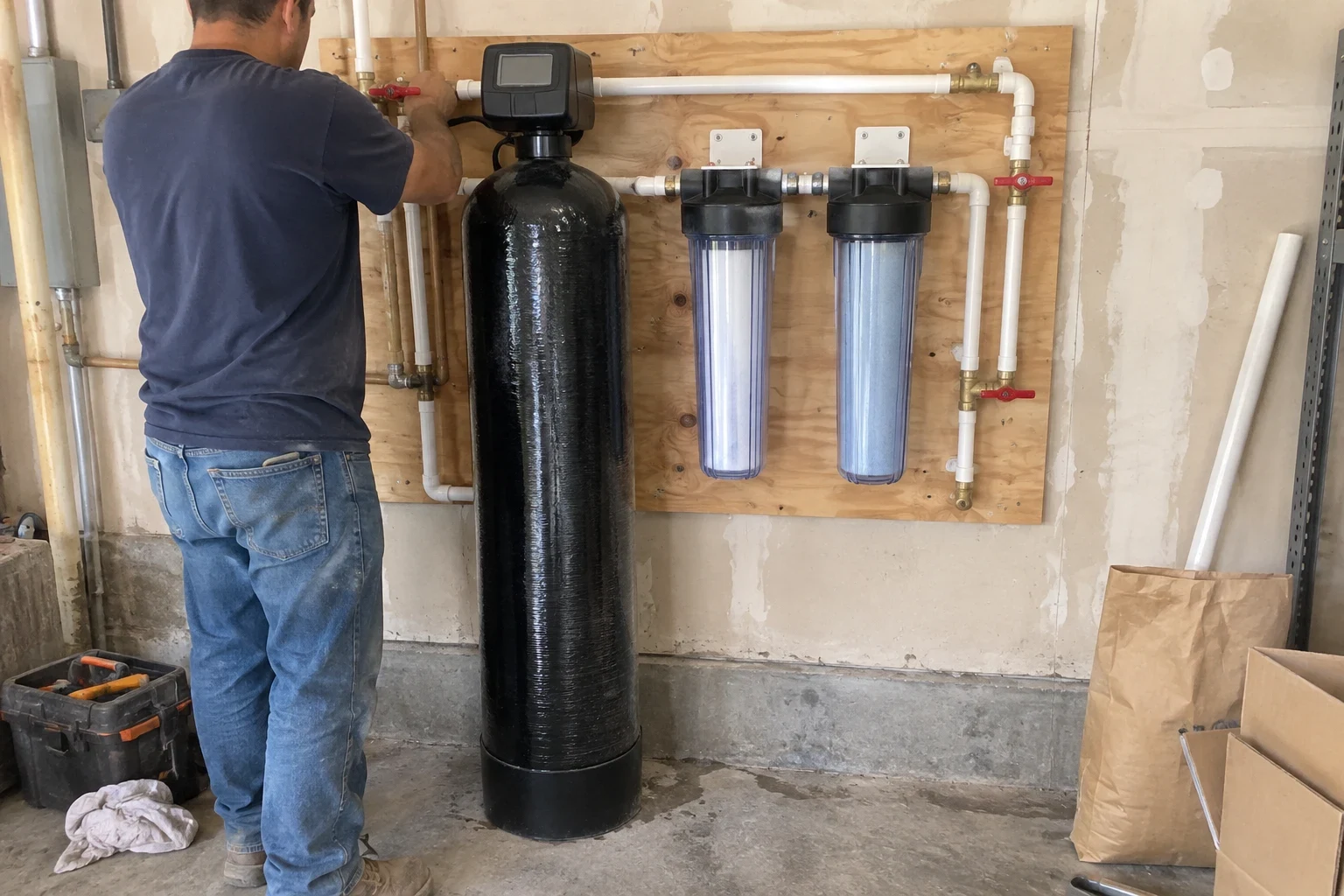
This system goes on your main line, before the plumbing splits off to each room. That means the kitchen faucet, every shower and the washer all draw the same filtered water. We test first, match the equipment to your home and walk you through each component before installing.
Filtered water from every faucet and shower
Installers also call this a point-of-entry system, because it treats water right where the supply pipe comes into your home. A typical setup has two stages. First, a sediment cartridge traps sand, grit and bits of rust. Then a tank of carbon media removes chlorine along with the taste and odor it leaves behind. When the water is disinfected with chloramine instead, we switch to catalytic carbon, which is much better at breaking it down.
This makes sense when the issue follows you from room to room: shower steam that smells like a pool, cloudy ice, specks caught in faucet screens. If drinking water is your only worry, a smaller under-sink unit from our Reverse Osmosis Systems page could do the job with less equipment, and we will say so.
Every install starts with your free water test. Before we touch your main line, we go over your results, explain what they mean and size the right whole-home system for your home. Our own installers then fit it and walk you through how it works.
What comes with your system
Testing comes first
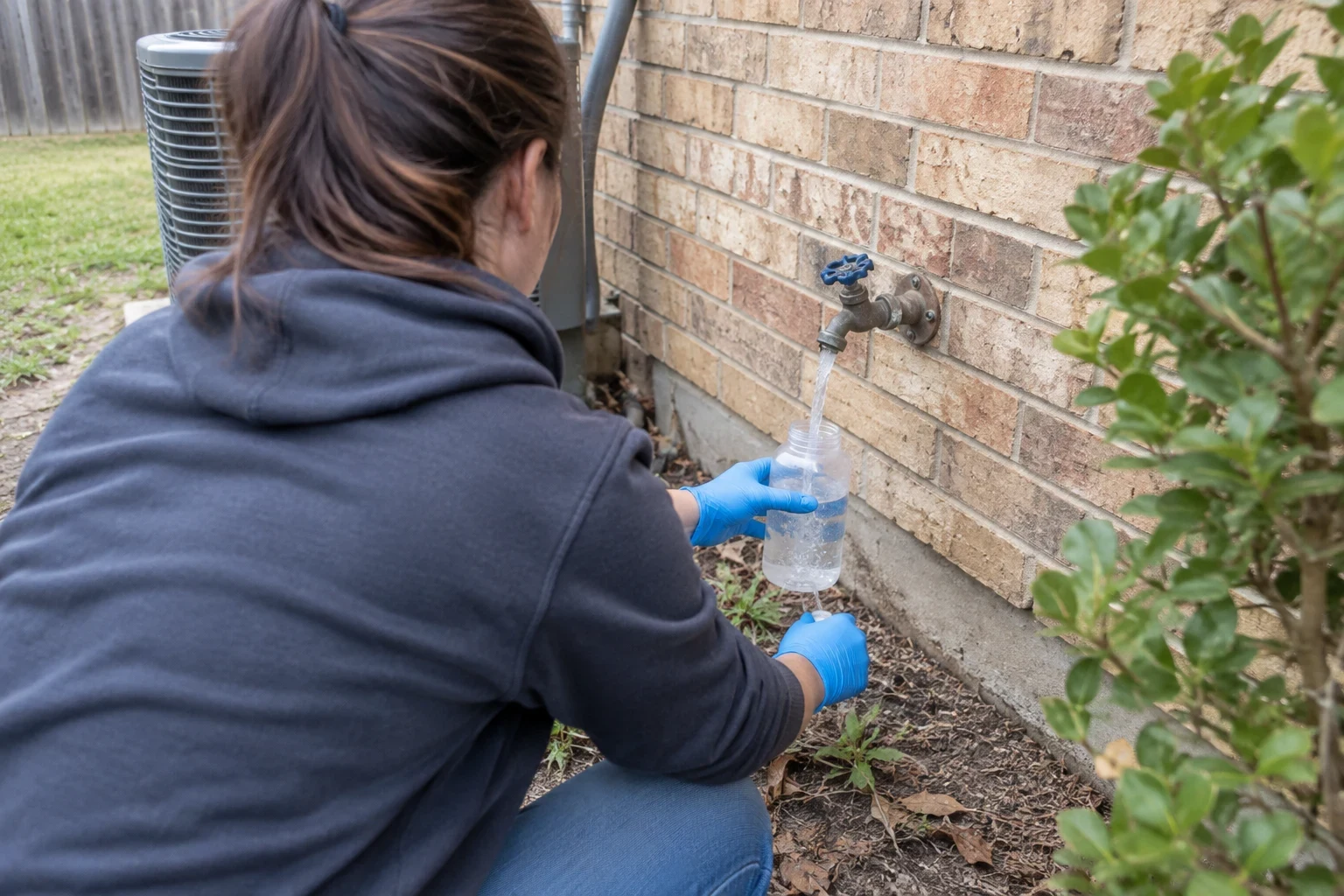
Before we suggest any equipment, we measure chlorine, hardness, iron and sediment from your own faucet. That way the system fits your water, and you keep a copy of the results.
Sediment prefilter
This swappable cartridge catches grit and loose scale ahead of the carbon. Keeping that debris out helps the media last.
Carbon tank sized for your home
We pick the tank based on how much water your household pulls at once, so pressure stays steady with two showers and the dishwasher going.
Bypass valve
When the filter needs service, you can route water around it and keep the rest of the house running.
Photo record of the work
You get pictures of your main line before we start, the new fittings and the finished setup. We add a written note on any wear we noticed in your plumbing.
Free installation and a clean space
Installation is free. We lay down floor protection, take the boxes and wrapping with us and leave the area tidy.
Signs your home could use filtration at the main line
- Bathroom steam carries a chlorine smell
- Hot showers release chlorine into the air, so the whole room ends up smelling of it. A faucet-mounted filter in the kitchen will not touch that.
- Grit collecting in aerators
- Sand or dark flecks piling up in faucet screens and showerheads show sediment is moving through your plumbing. Left alone, it wears on valves, toilet flappers and appliance inlets.
- Drinks and ice have an odd flavor
- Coffee, tea and anything else made with tap water can pick up a chlorine taste. Ice cubes and plain hot water are often where people notice it first.
- A cartridge for every room
- Pitcher filters, fridge filters and shower filters all need replacing, and the cost adds up. One system where water enters your home can take the place of all of them.
- Stains on porcelain
- Rusty or gray marks on sinks and tubs can point to iron or sediment. A test sorts out which, and if iron is behind it, our Iron and Sulfur Removal service may suit you better.
What to expect, start to finish
- 1
A quick call and a free test
When you phone us, we ask what you have been noticing and pick a time to test your water. The test costs nothing and you are under no obligation.
- 2
Results and a written plan
We go over the numbers with you, explain which system makes sense and hand you a quote broken out by line item. If a whole-home filter is not needed, you will hear that from us directly.
- 3
Installation day
We locate your main line, which in many Central Texas homes comes in by the garage or along an exterior wall. After photographing it, we turn off the water, plumb in the filter with a bypass loop and insulate it if it sits somewhere a hard freeze could reach. Expect to be without water for a few hours.
- 4
Final checks and a walkthrough
Once the media is rinsed through, we inspect each fitting for drips and measure pressure at several faucets. Before we leave, you learn where the bypass valve is, how to swap the prefilter and when the carbon will be due for service.
What goes into the price of your system
Because installation is free, the price you see comes down mostly to the equipment, picked to match your water and the people living with it. Your quote by phone lists each part on its own line, and we follow up with the same breakdown in writing. Here is what pushes that number up or down.
- Household size and peak demand
- More bathrooms and more people running water at the same moment call for a larger carbon tank, so pressure holds steady in the morning rush. A two-bath home and a four-bath home end up with different equipment.
- Standard or catalytic carbon
- Standard carbon handles chlorine well and costs less. If your supply is treated with chloramine, catalytic carbon is the better choice, and it carries a higher price.
- Where your main line sits
- An easy-to-reach line in the garage keeps the parts list short. An outdoor hookup can mean adding a weather cover or freeze insulation.
- Whether a second stage is needed
- If your test shows hardness or iron, pairing the filter with a softener or one of our Salt-Free Water Conditioners may make sense. We only raise it when the numbers point that way.
Whole-home filtration questions we hear often
- Will I notice weaker flow at my faucets once it is installed?
- A properly sized system should feel the same as before. We choose the tank based on the most water your household draws at one time, and we test pressure at several faucets after the install. A clogged prefilter can slow things down later, so we show you how to change it.
- Does a whole-home filter take care of hard water too?
- No. Carbon removes chlorine, odors and off tastes, but hardness minerals go straight through it. If your results point to scale, we can talk through Water Softener Installation or a salt-free conditioner.
- Do I need a drinking water filter on top of this?
- For many homes, whole-home carbon alone makes tap water taste good. If you want an extra layer for drinking and cooking, a reverse osmosis unit under the kitchen sink adds it. We will tell you honestly whether your water calls for one.
- How much maintenance should I plan for?
- The sediment cartridge usually needs changing every few months, depending on how much grit your lines carry. The carbon tank lasts far longer between service visits. You get a schedule based on your test results and the size of your household.
- What happens after my free water test?
- We go over your results in plain terms, explain what they mean for your home and recommend a system sized to your household. Our own installers then fit it, and installation is free.
Start with a free water test
Testing shows us whether whole-home filtration fits your water before you spend anything. We work in Taylor, Hutto, Round Rock and the surrounding towns.