ServicesWater Testing & Analysis
Water Testing & Analysis in Taylor
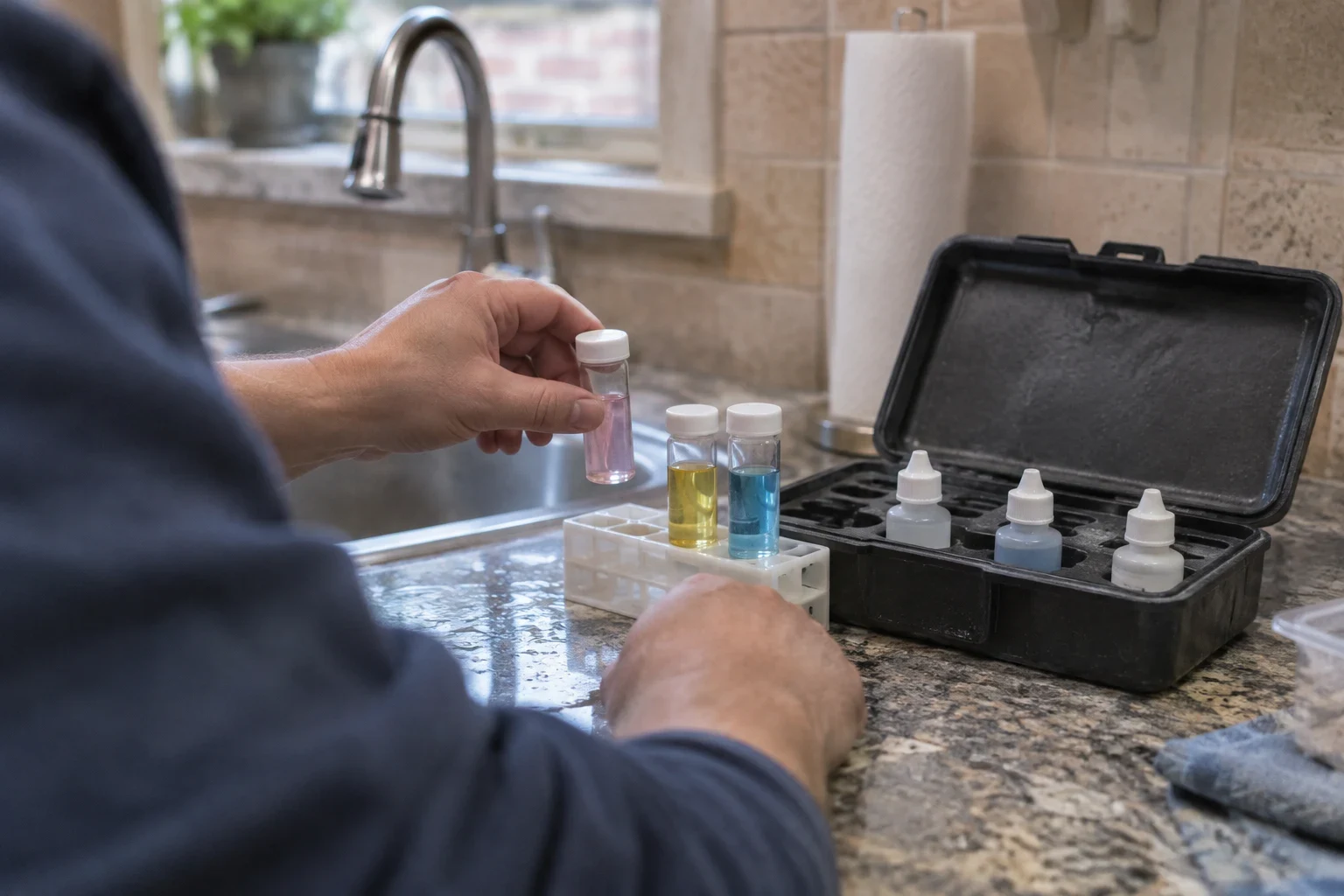
Good advice about filters starts with real numbers. We come to your home, run each reading at the tap while you watch, and hand you a written copy, so any choice about treatment rests on what your water really contains.
Know your water before you treat it
Water testing is the first step we take with every customer, and often the only one they need. A short visit tells us how hard your water is, how much chlorine is coming through the tap, whether there is iron behind those orange stains, and how many dissolved solids are left after the city or your plumbing has had its turn.
The results decide the recommendation, not the other way around. If your water is fine, we will say so. If the numbers point to a softener, a salt-free conditioner, a reverse osmosis system or whole-home filtration, we explain why that one fits and what it will and will not fix.
You keep a written record of every reading. That matters later when you compare quotes, check whether an installed system is doing its job, or need to show someone what your water was like on a given date.
What we check during the visit
- Hardness, measured in grains
- Calcium and magnesium are what leave that white film on fixtures and shower doors. We put a number on them so you know whether you have a real hardness issue or a small one, which is what decides if a softener or conditioner belongs in the conversation.
- How much chlorine comes through
- Chlorine is there to keep tap water safe, and it is also the reason for that pool smell or flat taste. Knowing the level lets us size a carbon filter to your water instead of guessing.
- Iron and stain clues
- Rusty rings in sinks and toilets usually mean iron, coming either from the supply or from aging pipes. We test for it and look at where the staining appears to help sort out which one it is.
- Dissolved solids and pH
- A total dissolved solids reading shows how much is in your water overall. pH tells us whether it leans acidic enough to wear on copper and fixtures, and together they explain a lot about taste, spotting and corrosion.
- Results you keep
- We record each reading with the date and which tap it came from. If we see scale, staining or worn fixtures, we can photograph them so the record is complete.
- When a lab is the better tool
- Some concerns, such as bacteria or lead from older plumbing, can't be answered by an in-home test. When that comes up, we say so directly and explain how to send a proper sample to a laboratory.
When a water test makes sense
Chalky film that keeps returning
If faucets and showerheads crust over again a few days after you scrub them, hardness is the likely cause. Testing shows how much, so you avoid buying more equipment than your water needs.
An odd taste or smell
A chlorine bite, a metal taste and a musty odor each come from something different. A test points to the cause before you spend on a filter.
Rusty or brown marks
Stains on tubs, toilets and laundry often trace back to iron. The level matters, because it changes which treatment will work.
Cloudy glasses and tired appliances
Spotted dishes, or a water heater that rumbles or wears out early, can both come from scale. A hardness reading tells you whether your water is playing a part.
A house that is new to you
Moving in means inheriting plumbing you know little about. A first test gives you a baseline to compare against in the years ahead.
What you might spend after the test
There is no charge for the in-home water test, and nothing to sign or buy once we finish. Any cost comes later and only if your results point to a system worth having. Installation is free on the systems we recommend, so your quote reflects the equipment your water actually calls for.
Your readings
A modest hardness number might only justify a simple conditioner. Heavy iron or a sharp chlorine taste calls for different equipment, and those numbers move the price more than anything else.
One sink or every tap
A reverse osmosis unit under the kitchen sink is a smaller project than whole-home filtration on the main line. We tell you which one your results support.
Outside laboratory work
Questions like lead from older pipes need a laboratory sample, and that cost is separate from our visit. We walk you through your options before you choose.
How your plumbing is laid out
Where the main line comes in, how much space is around it and the age of the pipes all shape how a system gets fitted. We note these during the visit so the quote holds no surprises.
What happens from call to results
- 1
You give us a ring
Tell us what has caught your attention, and we pick a visit time that works around your schedule. A couple of questions about your house and pipes help us pack the right testing gear.
- 2
Readings at the tap
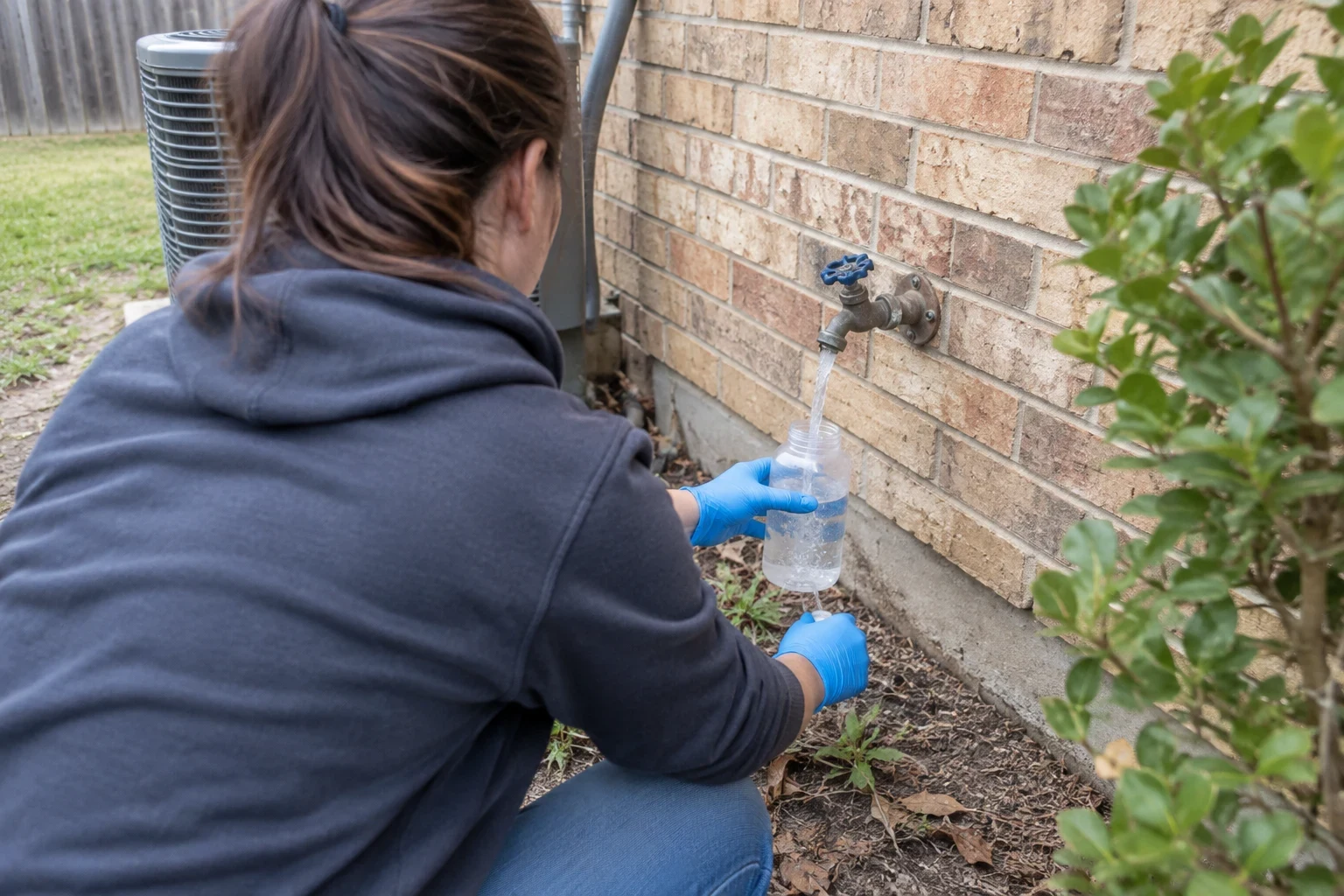
We pull samples at the kitchen sink and, when useful, a bathroom or the line by your water heater. Most results show up within minutes, and we point out each one as it appears.
- 3
A walk past the trouble spots
We look at faucets, showerheads, the water heater area and any stains you want us to see. If you're comfortable with it, we take photos that sit alongside your written results.
- 4
Straight talk, then a quote if it fits
We explain what your numbers mean and whether treatment is worth it. If it is, you get a clear quote for that system. If your water is in good shape, that is where we stop.
Questions about water testing
Is there really no charge for the test?
That's right. The in-home test is free, and there is no expectation that you buy anything. A good number of our visits end with us telling the homeowner their water needs nothing.
How much of my day will this take?
Not much. Most visits wrap up in under an hour, talking time included. Someone just needs to be home to let us reach the taps and tell us what you have been noticing.
Can you check my water for lead?
Lead needs to be measured by a laboratory to be trusted, so we don't rely on a quick strip for it. If your plumbing is on the older side or something has you worried, we explain how to collect a sample the right way and help you make sense of the report when it comes back.
Are you going to push equipment on me?
No. We only recommend a system when your readings back it up, and you see those readings yourself. If a softener would be more than your hardness level calls for, we tell you that.
Will the results show if hard water is hurting my appliances?
Your written results show how hard your water is and how much scale it may be leaving behind. We explain what each reading means for your home and whether a softener or conditioner would help.
Do you come out to homes beyond Taylor?
We do. We also test water in Hutto, Round Rock, Georgetown and other towns close by. Mention your address when you phone and we'll confirm.
Find out what is in your water
One short visit gets you real numbers, a written copy to keep, and a straight answer about whether you need anything at all. If you do, we will give you a clear quote on the spot.