ServicesIron and Sulfur Removal
Iron and Sulfur Removal in Taylor
Orange rings in the toilet, dull laundry and a rotten-egg smell at the tap can all be fixed. We test your water to learn exactly what is behind them, then install a filter that fits how your home uses water, so the staining and the odor stay gone.
What iron and sulfur do to your water
Iron and hydrogen sulfide rarely threaten your health, but they make daily life harder. Dissolved iron is invisible when you fill a glass. Give it a little time in contact with air and it oxidizes into rust, which is why it ends up staining sinks, tubs, the dishwasher and your white towels. Hydrogen sulfide is the gas that smells like rotten eggs, and it can also darken silverware and leave a dull film on faucets.
The fix depends on what is in your water and in what amount. Light, clear iron calls for a different approach than heavy iron. An odor that appears only when the hot water runs often traces back to the water heater, not the supply. So we begin with a test and an honest read of the numbers, not a pitch.
Along the way we measure the iron in your water and put your test results in writing. We explain what the numbers mean and size the right system, which our own installers then fit.
What the work includes
- 01
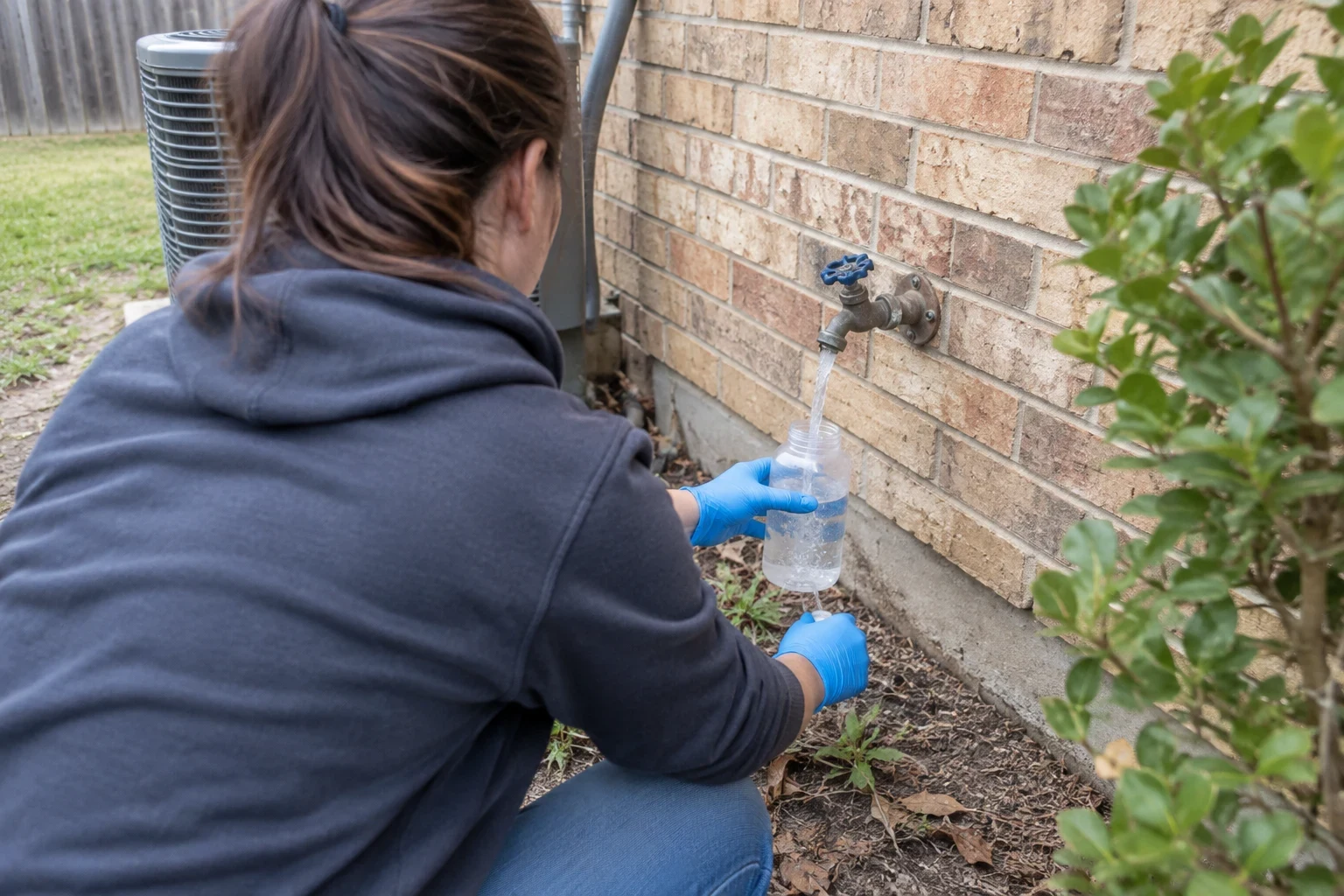
A water test comes first
We measure iron, manganese, hydrogen sulfide, pH and hardness right at your tap. Those results pick the equipment, not a one-size package.
- 02
An oxidizing filter matched to your results
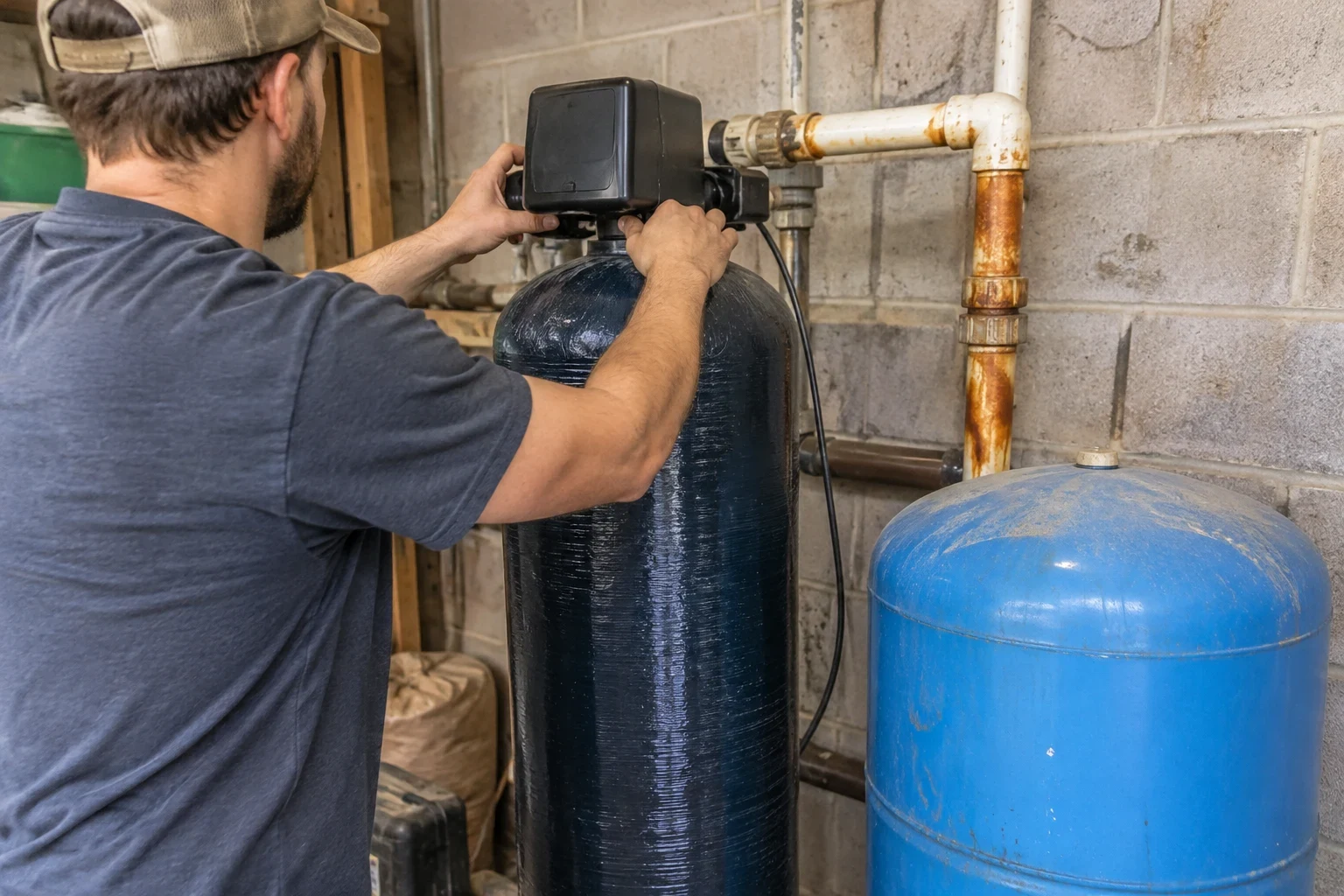
In most cases we use an air-injection filter, which changes dissolved iron and sulfur into small particles the media bed can catch. Higher levels may need catalytic carbon or another media.
- 03
Installation on the main supply line
We connect the filter at the point your water comes into the house, so the kitchen, bathrooms, washer and dishwasher all get filtered water. Installation is free, and we cover the work area and clean up when we are done.
- 04
A look at your water heater
When the odor is worst on the hot tap, we check the water heater and tell you what we find. A reacting anode rod is sometimes the real cause, and that is worth knowing before you spend money on a filter.
- 05
Your results and photos in writing
We hand you the test numbers, photos of the staining and buildup, and a plain explanation of the system we suggest and the reason for it.
Questions about Iron and Sulfur Removal?
Call(512) 601-5828Signs your water has iron or sulfur
Rust-colored stains that return
Orange or brown marks in the toilet bowl, below the faucet or along the tub point to iron. You scrub them away and they are back within a few days.
A rotten-egg smell at the tap
That odor is hydrogen sulfide. If it is strongest on the hot side, the water heater may be part of the cause, which we check first.
White laundry turning dingy or tan
Iron settles into fabric with every wash. Towels and shirts slowly lose their color, and extra detergent does not bring it back.
Darkened silverware and dull faucets
Sulfur in the water can tarnish silverware and leave a dull film on fixtures that comes back soon after cleaning.
A metallic taste in drinks
Coffee, tea and plain water can pick up a metal flavor when iron is present, even when the water looks clear in the glass.
How your installation day goes
- 1
Test and an honest answer
We test your water and walk through the results with you in your home. If a simpler fix, like a plumbing fix, will clear up the problem, you hear that from us first.
- 2
Protect the work area
On install day we lay down drop cloths, photograph the spot where your main line enters and shut off the water at the main.
- 3
Mount and plumb the filter
We set the filter tank on level ground near the main line and plumb it in with a bypass valve, so you can route water around it for service.
- 4
Backwash and leak check
We run the first backwash to rinse the media, bring the water back on slowly and check every fitting for drips before we pack up.
- 5
Walkthrough and cleanup
We show you the bypass, explain the overnight backwash and what to watch for, then take the packaging with us and leave the area clean.
What affects the price
The equipment cost depends mostly on what your test shows and how much water your home uses. Installation is free, so the quote is about the system itself. We list every part on the quote so you can see what you are paying for.
- Iron and sulfur levels
- Light levels can be handled by a smaller filter. Heavy iron or strong sulfur may need a larger tank, a different media or two stages.
- Household water use
- More bathrooms and more people mean higher flow, and the filter has to keep up during peak use, like long summer showers and lawn watering in a Texas July.
- Type of problem
- Manganese, iron bacteria or low pH each change the equipment. A home with both iron and hard water may be better served by pairing the filter with a water softener.
- Plumbing layout
- Where your main line enters and how much room is nearby affect the parts needed. A tight garage or utility closet may take extra fittings.
Questions about iron and sulfur
Is iron or sulfur in my water dangerous?
At the levels typically found in household water, iron and hydrogen sulfide are considered nuisance problems. They change how water tastes and smells and what it leaves behind on surfaces, but they are rarely a health concern. Your test results show your real numbers, and we will explain plainly what they mean for your family.
Can a water softener remove iron?
A softener can take out a little clear iron, but it does nothing for sulfur and it has trouble once iron levels climb. Heavy iron coats the resin inside a softener and shortens its life. If your test also shows hardness, we may recommend putting a dedicated iron filter in front of the softener.
The smell is only in my hot water. What does that mean?
A sulfur smell limited to the hot side usually starts inside the water heater, where the anode rod can react with the water. In that case the supply itself may be fine. We look at this first, since a whole-home system might not be the right answer.
Will a filter stop iron stains on my fixtures?
Often, once the system is sized to your water. We give you your written test results and explain which iron filter fits, and our own installers fit it.
How much upkeep does the filter need?
Most oxidizing filters clean themselves with an automatic backwash, usually overnight. The media slowly wears down over several years, faster when it handles more iron. We show you the signs to watch for and when it makes sense to give us a call.
Find out what is staining your water
A free test tells you whether it is iron, sulfur, manganese or something else, and what it will take to fix it. We serve Taylor and nearby towns including Hutto, Round Rock and Georgetown.