ServicesWell Water Filtration
Well Water Filtration and Treatment in Taylor
A private well means you are the only one keeping an eye on your water. We test it right at your pressure tank, walk you through what the numbers mean and install a system built around those results, with installation at no charge.
Filtration matched to what your well actually holds
A well draws from the ground under your property, so no utility tests or treats that water for you. Wells around Central Texas often carry hardness minerals, and some add iron, a rotten-egg sulfur smell, sediment or bacteria. Each of those needs different equipment. That is why we start with a test instead of a catalog.
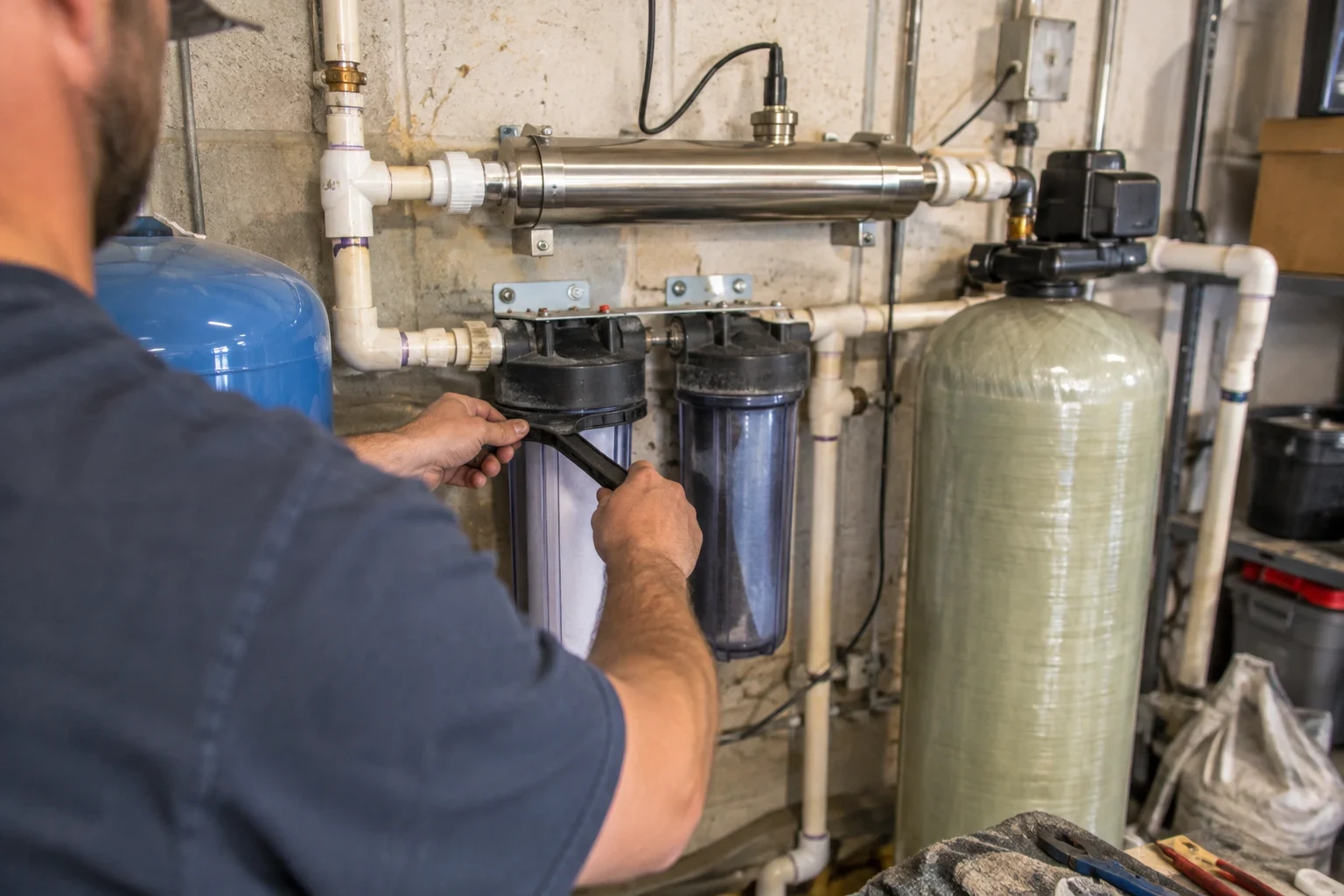
Most well systems we install combine a few stages: a sediment filter to catch sand and grit, a main treatment tank picked for your results and, when bacteria is a concern, UV Water Purification at the end of the line. If iron or sulfur is your biggest problem, our Iron and Sulfur Removal page goes into that equipment in more detail.
Some neighbors call us after scale or staining has already hurt a water heater or fixtures. We give you written test results, explain what they mean and size the right system for your well, which our own installers fit.
What well water filtration with us includes
A water test before any recommendation
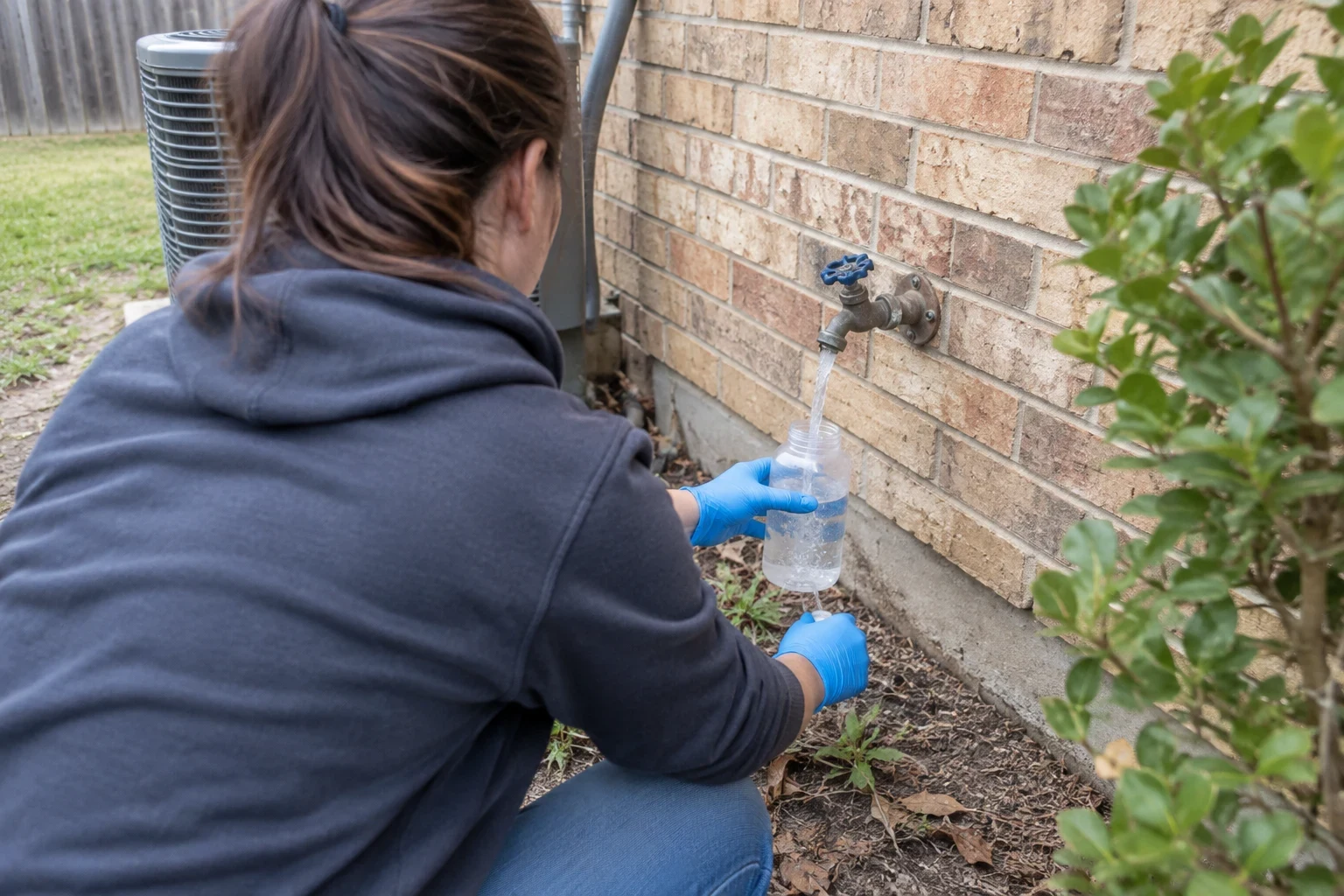
We check hardness, iron, pH and sulfur odor at your home, and we can arrange lab testing for bacteria when it matters. You keep a copy of every result.
Sediment pre-filtration
Wells push sand and silt, especially after heavy rain or when a pump is working hard. A sediment stage protects everything downstream and keeps faucet aerators from clogging.
Main treatment chosen from your results
Depending on the test, that may be a softening tank, an oxidizing filter for iron and sulfur, carbon for taste and odor, or a neutralizer for acidic water. We leave out stages your water does not need.
Disinfection only when the test calls for it
If bacteria shows up, we place a UV unit after the filters so the light reaches clear water. We do not add one by default.
Free installation and a walkthrough
We plumb in the system with a bypass valve, program the controls and run water through to confirm there are no drips at any fitting. You also get a quick lesson on swapping cartridges and the few things worth watching between visits.
Signs your well water needs attention
- Rust-colored marks on porcelain and laundry
- When sinks pick up an orange tint and white towels slowly turn tan, iron is usually the cause. That same residue settles inside pipes, the water heater and the washing machine, where you never see it.
- A rotten-egg smell from the hot tap
- That odor is usually hydrogen sulfide. It can get worse inside a water heater, so you may notice it most in the shower.
- White crust and appliances that quit early
- Hard water leaves chalky scale on faucets, glass shower doors and heating elements. Left untreated, it shortens the life of water heaters and dishwashers.
- Grit in aerators or the toilet tank
- Sand and silt mean sediment is getting past your well screen. It wears out valves and clogs fixture screens sooner than you would expect.
- Blue-green marks under faucets
- Blue-green stains near drains and spouts often point to acidic water slowly wearing at copper pipes. A simple pH test confirms it.
- No test in the last year
- Bacteria and nitrates have no color, taste or smell. If your well has not been tested lately, or something changed after flooding or well work, a test is the only way to know.
How a well filtration job runs
- 1
A phone call, then a free test
Let us know what has you concerned, whether it is a smell, a stain or simply never having tested. We pick a time to come test the water in your home, at no cost to you.
- 2
A written recommendation and quote
We go over your results line by line and explain why each stage is there. If something is optional or not worth it for your water, we tell you that too.
- 3
Installation day
Most systems go near the pressure tank or where the line enters your home. Your water is off for part of the visit, we lay down drop cloths, and we clean up and haul away packaging before we go.
- 4
Retest and a care schedule
After startup we test the treated water to confirm the system is doing its job. You get a simple schedule for cartridges, media and any UV lamp changes.
What affects the price of a well system
No two wells carry the same mix of minerals and grit, so well systems vary more than setups on city water. We build your quote from your own test results. Because installation comes at no charge, what you pay goes toward the equipment your well truly calls for.
- What the test finds
- Each problem usually means one more stage. A well with only sediment costs far less to treat than one with iron, sulfur and bacteria.
- Water use and flow rate
- Tanks are sized for the number of people and bathrooms in your home. Undersized equipment drops pressure and wears out early.
- Space at the install point
- Tight closets, re-routed plumbing or equipment placed outdoors that needs shelter from summer sun can add parts and time.
- Ongoing upkeep
- Cartridges, UV lamps and filter media all need periodic replacement. We include those costs in the conversation so nothing surprises you later.
Questions about well water filtration
- My water looks and tastes fine. Do I still need a test?
- We recommend it. Bacteria and nitrates are invisible and have no taste. A test tells you whether you need treatment at all, and sometimes the honest answer is very little.
- How often should I retest my well?
- Once a year is a good habit for bacteria. Test again after flooding, after repairs to the well or pump, or whenever you notice a change in taste, smell or clarity. Our Water Testing & Analysis page explains what each test covers.
- Will a filtration system lower my water pressure?
- A system sized for your flow rate should cause only a small drop you are unlikely to notice. Pressure loss usually comes from undersized equipment or clogged cartridges, which is why we size from your household use and give you a change schedule.
- What happens after my free well water test?
- We give you written test results, explain what they mean and size the right system for your well. Our own installers then fit it.
- How long does installation take?
- Most well systems are installed in a single visit. Larger multi-stage setups or jobs that need new plumbing runs can take longer, and we tell you that when we give your quote.
Find out what is in your well water
A short phone call gets a free test on the calendar. From there you get clear results and a quote built around them, with installation at no charge.