ServicesWater Softener Installation
Water Softener Installation in Taylor, TX
White crust on faucets, cloudy glassware and a water heater that pops and rumbles are classic signs of hard water. We measure hardness right at your tap, pick a softener sized to how your family really uses water, and install it cleanly so you know how to look after it.
Is a Water Softener Right for Your Home
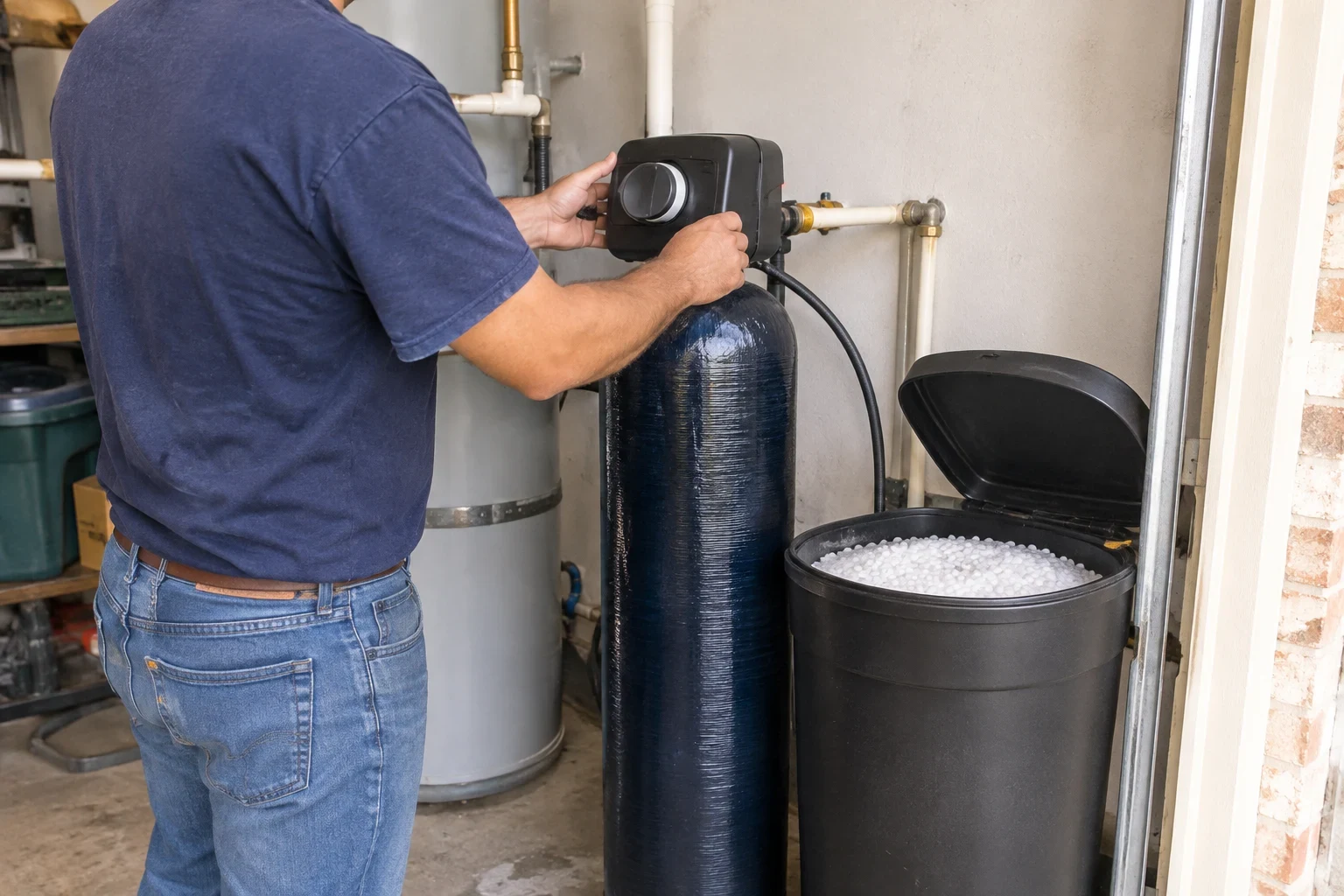
Inside a softener, water flows through a tank of resin beads that grab calcium and magnesium and trade them for a little sodium or potassium. What comes out rinses off cleanly, lathers well and quits leaving crusty mineral deposits on fixtures, glass and appliances.
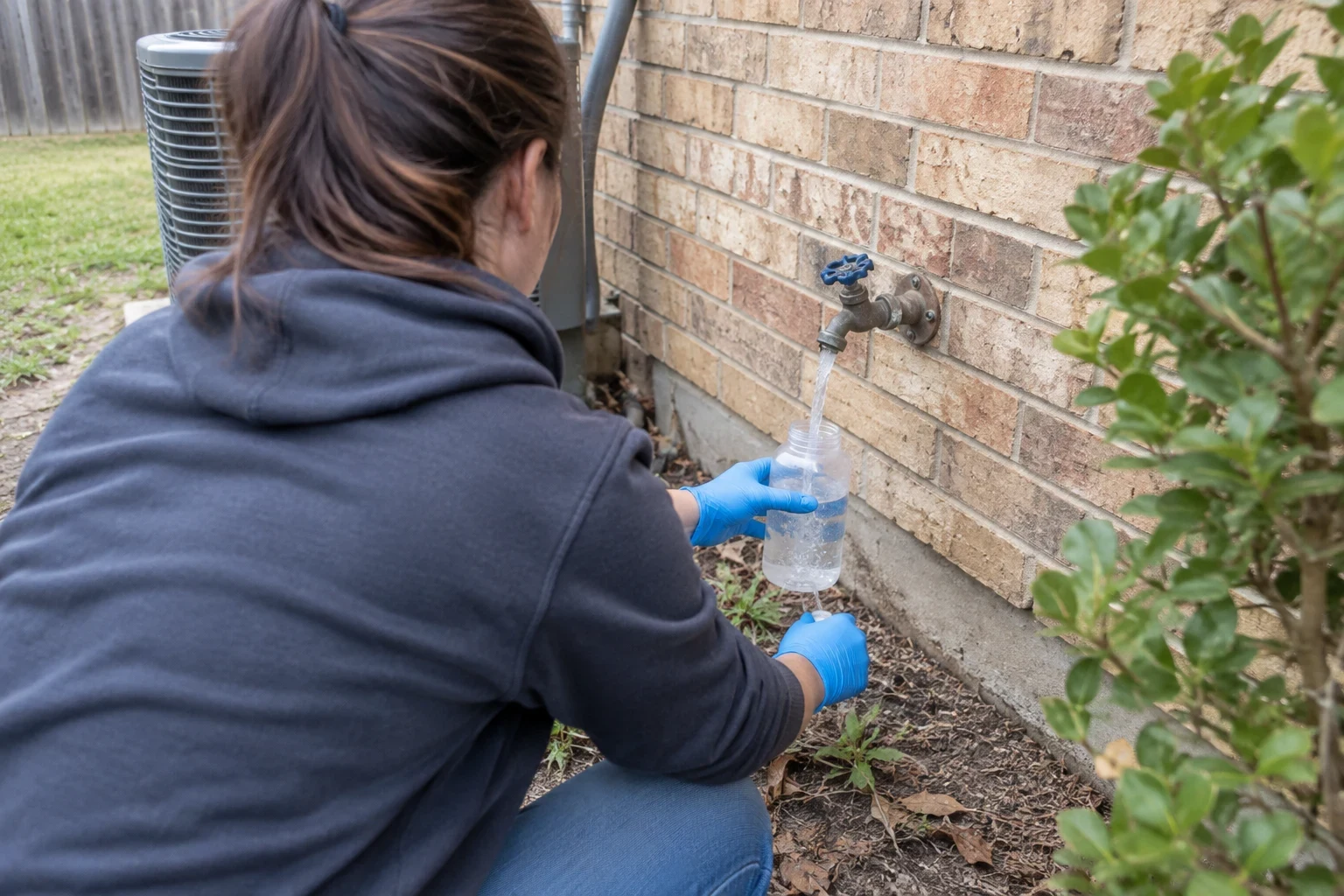
Hardness around Taylor and nearby towns can be noticeable, but it is not the same in every house, so we do not guess. We test at your faucet and then tell you straight whether a softener, a salt-free water conditioner or nothing at all is the better choice.
Replacing a softener that quit? We start with a free water test, explain the results and size a new softener to match, and our own installers fit it.
What Comes With Every Softener Install
- 01
Testing before sizing
We measure hardness and check for iron, then set grain capacity by how many people live with you and how many gallons you run each day. An undersized unit regenerates over and over and eats salt. An oversized one leaves resin sitting idle.
- 02
Hookup to your water line
Plenty of newer houses come with a softener loop already roughed in near the garage. If yours lacks one, we explain what tying into the main line involves before anything gets cut.
- 03
Bypass and drain, done right
Each system gets a bypass valve, so you can turn softening off and still have water everywhere else. The drain line ends with a proper air gap to keep wastewater from ever pulling back into your supply.
- 04
Setup and first regeneration
We program the control head for your hardness and family size, add water and salt to the brine tank, and let the first cleaning cycle run before we go.
- 05
Hands-on lesson and a tidy space
You will see how to pour in salt, judge the level and flip the bypass. Boxes and wrapping leave with us, and the work area gets wiped down.
Questions about Water Softener Installation?
Call(512) 601-5828Signs Hard Water Is Wearing On Your Home
Chalky rings around fixtures
Whitish deposits at the base of faucets and spray holes that keep clogging in the shower are the easiest hard water clue to spot.
Filmy glasses after every wash
When glassware comes out of the dishwasher hazy even with rinse aid, dissolved minerals are drying onto the surface.
Soap that barely suds
Minerals work against soap and shampoo. You end up using more and still feel a coating on your skin and hair.
Noise from the water heater
Popping or rumbling usually means mineral scale has settled in the tank, making the heater burn more energy to deliver the same hot water.
A softener that gave up
If hardness is creeping back, salt has formed a hard crust in the brine tank or the valve no longer runs its cycle, the unit needs attention. We tell you honestly when it is time to replace it with a new system.
What to Expect on Install Day
- 1
Free test and a quote by phone
Once you call, we arrange a free water test and go over the results with you. You then get a written quote showing the unit, the parts and any plumbing changes, before you commit to anything.
- 2
Prepare the work area
We cover the floor around the install spot, close the main valve and let the nearby pipes empty so the connection stays dry.
- 3
Place and plumb the system
The resin tank and brine tank go on firm, level ground. We join the bypass valve to your existing loop or the main line and route the drain line to code.
- 4
Restore water and confirm
We open the water back up gradually and inspect each fitting for drips. Then we program the valve, run a regeneration and test water from a faucet to make sure it is soft.
- 5
Walk you through it
We show you where the salt goes, what the display means and how to bypass the system. Most installs wrap up within part of a day.
What Moves the Price of a Softener
Installation is free, so most of your price comes from the softener itself and any plumbing your home needs to receive it. Your quote lists each part on its own line, so nothing shows up later as a surprise. These are the things that change the total.
- Size of the resin tank
- Very hard water or a large family calls for more grain capacity. A bigger tank costs more at the start, but it cycles less often and goes through less salt.
- How the valve decides to regenerate
- A demand-style valve watches how many gallons pass through and only cleans the resin when it is needed, which keeps salt use down. A timer valve is cheaper to buy, though it runs on a fixed schedule even during a quiet week.
- Loop in place or plumbing to add
- If your garage already has a softener loop, hookup is simple. Without one, cutting into the main line takes extra pipe, fittings and labor.
- Other water issues
- When the test turns up iron or a heavy chlorine taste, a pre-filter or whole-home filtration may be worth pairing with the softener. We lay out the pros and cons, and the decision stays yours.
Common Softener Questions
Will softened water taste of salt?
Rarely. The sodium added is small, and it rises with how hard your water started out. If you want kitchen drinking water without it, a reverse osmosis system takes out most of that sodium.
How often will I add salt?
It depends on your hardness reading and your household's water use. Many people top off the brine tank about once a month. Before we go, we show you an easy way to check the salt so the tank never runs dry.
Softener or salt-free conditioner: which should I choose?
They work differently. A softener takes hardness minerals out, while a salt-free water conditioner alters them so they form less scale. Your test results and how much spotting and buildup bother you settle it, and we'll tell you honestly which suits your home.
Do you install a new softener after the free water test?
Yes. After the free test we explain your results, size the right softener for your household and install it with our own installers.
Can the new softener go where the old one was?
In most cases, yes. When the existing loop and drain are in good condition, we hook straight into them, and we take the old unit away once the new one is running.
Find Out If a Softener Fits Your Home
Tell us what you are seeing at your faucets and we will set up a free water test. You will know whether a softener is worth it before you spend anything.